
After the March Floods: A CMS Public Health Emergency Playbook for Hawai'i Biomeds
When the U.S. Department of Health and Human Services declares a Public Health Emergency under Section 319 of the Public Health Service Act, it unlocks a well-defined set of Medicare and Medicaid flexibilities administered by CMS. For biomedical departments in Hawai'i, the practical consequence of a flood-driven declaration is that Medicare beneficiaries who lost or had damaged durable medical equipment (DME), prosthetics, orthotics, and supplies may qualify for replacement without the usual face-to-face and documentation hurdles being applied in the standard way. Knowing which flexibilities are actually in force — and their sunset dates — is the difference between a smooth recovery and denied claims months later.
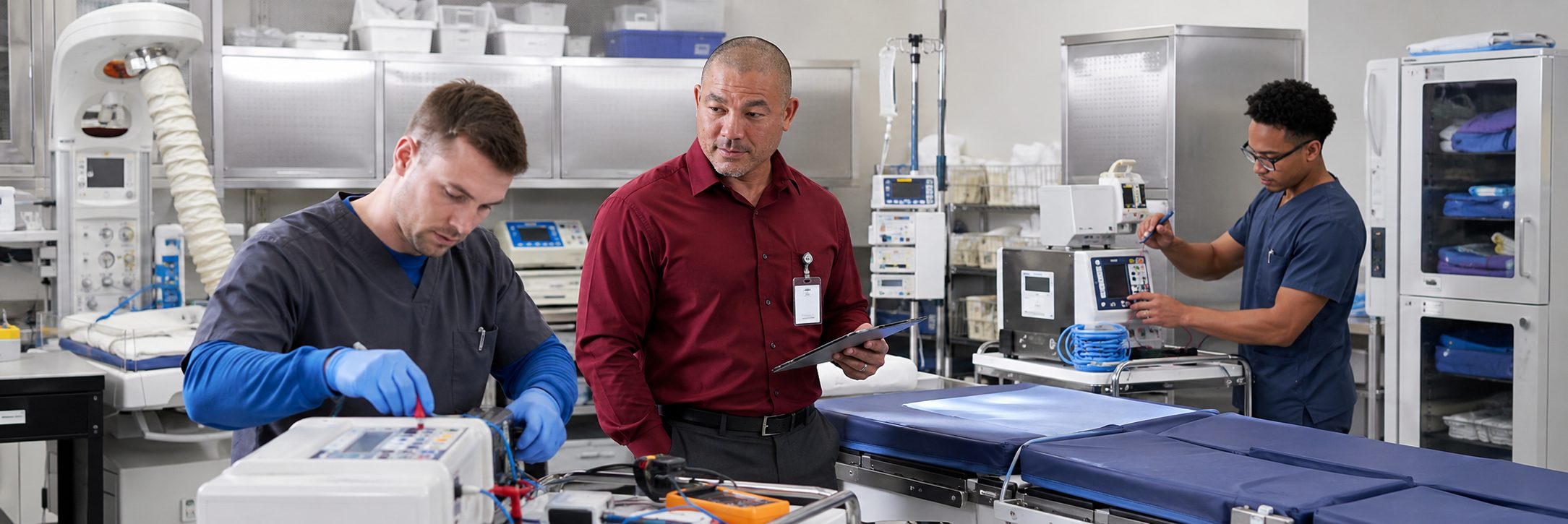
Our field-engineering triage for hospital biomed teams follows a strict priority order. First, re-commission life-support and patient-affecting equipment (ventilators, infusion pumps, defibrillators, physiologic monitors) only after they pass electrical-safety and functional verification per the manufacturer's service manual and AAMI guidance. Second, build the documentation chain CMS will accept: photographs of damage, serial numbers, replacement invoices, and dated service records tied to each asset. Standing water and salt-laden humidity are especially hard on power supplies, sealed sensors, and circuit boards, so any device that took water should be treated as suspect until proven otherwise.
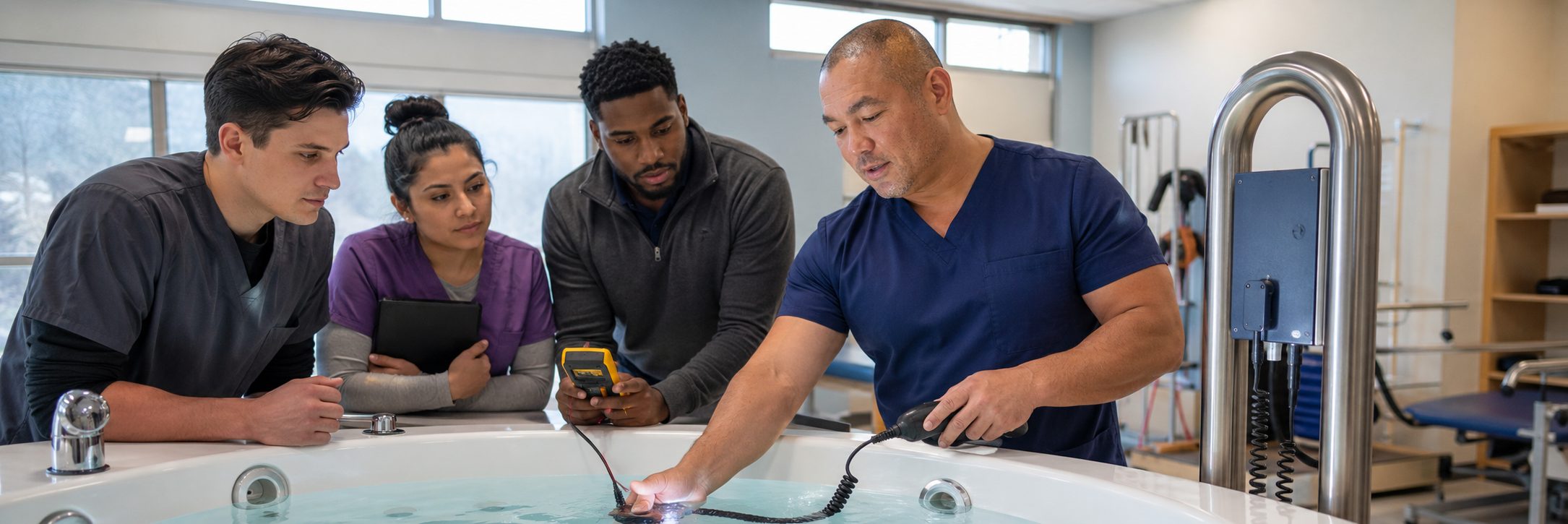
Before re-deploying anything that was submerged, we recommend corrosion inspection of connectors and boards, insulation-resistance and leakage-current testing to the applicable IEC 60601 / NFPA 99 electrical-safety limits, and — for equipment with fluid pathways or optics — contamination and calibration checks. When in doubt, the safer and often more defensible path is manufacturer-authorized bench evaluation rather than a field pass. This protects both the patient and the paper trail that surveyors and payers will later review.
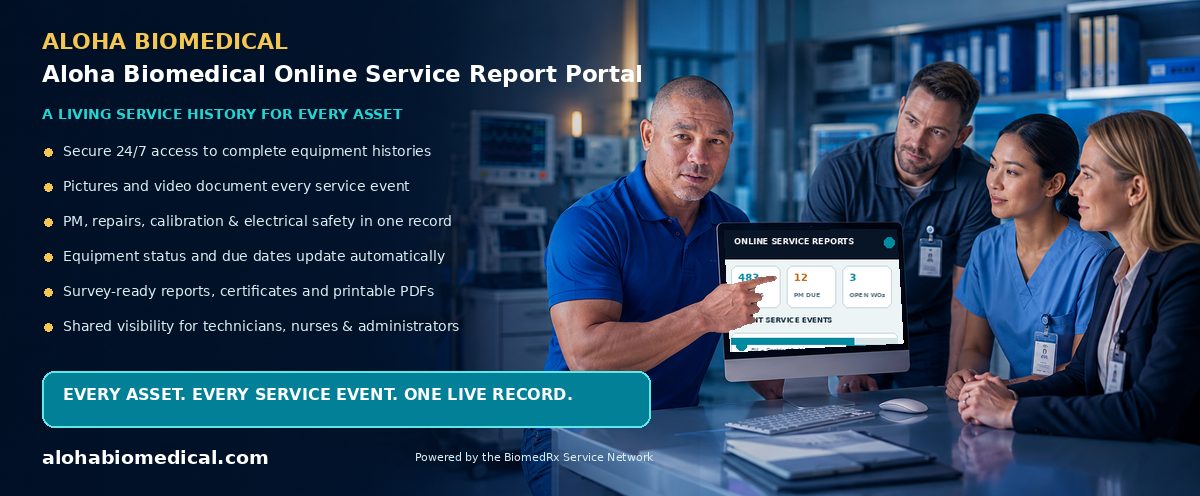
Recovery does not end when a device powers back on — it ends when the documentation survives a survey. The Joint Commission expects 100% of medical equipment to carry documented preventive maintenance, and any salvaged asset needs a fresh electrical-safety and functional record before it rejoins patient care. Beginning in 2026, the Joint Commission’s Accreditation 360 restructuring folds the former Environment of Care and Life Safety requirements into a single Physical Environment chapter that weighs the actual condition of equipment more heavily than binder thickness — so a clean post-flood service history is a competitive advantage, not just a compliance chore. Our island field engineers build that trail, referenced to NFPA 99, for every hospital we serve.
Sources: CMS Emergency Preparedness & Response; HHS Public Health Emergency Declarations; NFPA 99 Health Care Facilities Code